
Park Golf Equipment: Club Components, Balls
Message from the Nippon Park Golf Association:
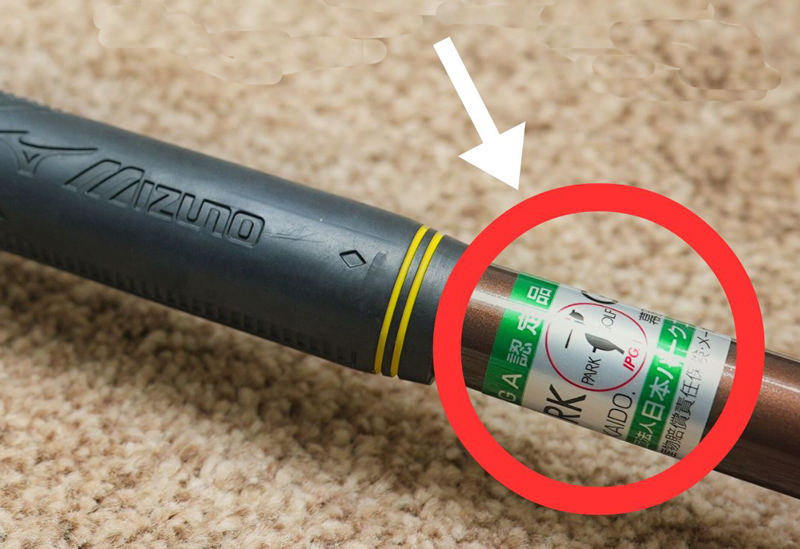
“Please Note!
We have recently received inquiries from people who purchased clubs that do not bear the certification seal.
Clubs without the certification seal cannot be used on official Park Golf courses.
*The certification seal serves as proof that a club has met safety standards for play. It is affixed to all clubs manufactured by authorized equipment makers belonging to the Park Golf Equipment Manufacturers Association and certified by the Japan Park Golf Association.
When purchasing a club, please be sure to verify that the certification seal is affixed to the shaft (near the grip).”
The Official Logo
The birth of the black woodpecker emblem –
The black woodpecker was chosen as Park Golf’s primary mascot in 1987. The original developers of park golf used a wooden club to hit a wooden ball repeatedly, just like a woodpecker!
Hokkaido, the sports birthplace is home to 8 species of woodpeckers, and the black and red “Kumagera” was chosen as it is the largest and most distinctive of the species.
Park golf is unique because every player uses just one club throughout the entire game. From powerful tee shots to delicate putts on the green, a single club must deliver distance, accuracy, control, and consistency. That remarkable versatility comes from the careful engineering of four essential components: the club head, the faceplate, the base and the shaft.
Japanese manufacturers have spent decades refining these designs, combining traditional craftsmanship with modern materials such as carbon fiber, engineered woods, and precision-balanced club heads to create clubs that feel comfortable for players of all ages and abilities.
Why Are Park Golf Club Heads Made of Wood?
Wooden park golf club heads provide better control, softer impact, and reduced vibration, making them ideal for beginners and senior players. These are the most popular types of wood used to make golf club heads, which by Nippon Park Golf Association standards must be “at least 82% wood by volume” and must weigh 600 grams or less.
Some of the most popular wood types used:
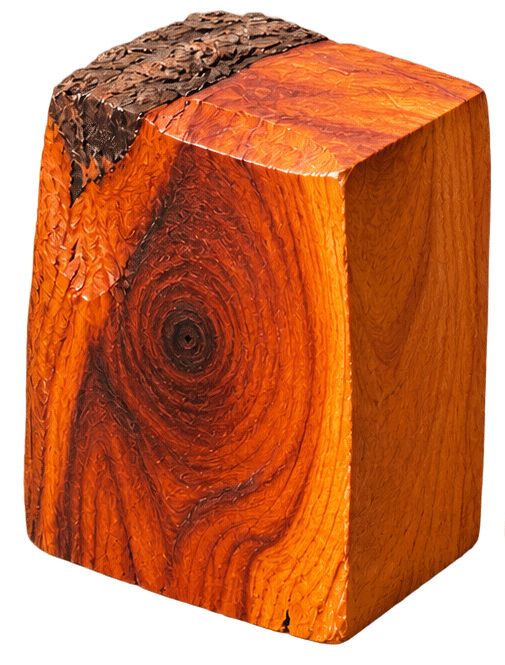
Persimmon
Found in: East Asia, especially Japan, China and Korea; American persimmon is native to the eastern/southern United States.
Properties: Dense, hard, fine-grained, excellent shock resistance
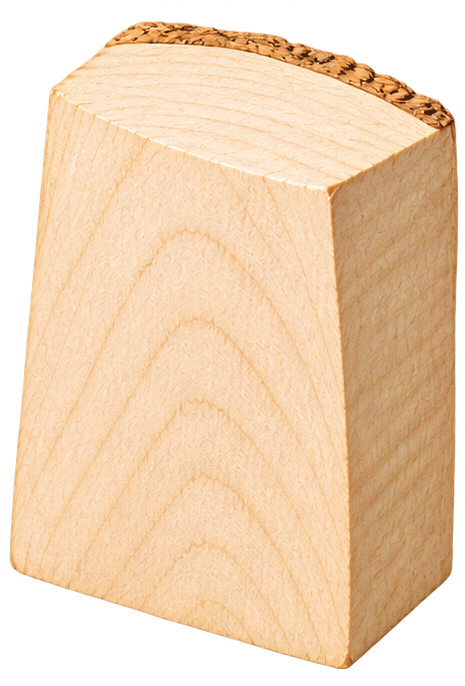
Maple
Found in: North America, Europe and Asia. Hard maple used for sporting equipment is particularly associated with the northeastern U.S. and Canada
Properties: Very hard, dense, smooth, light-colored and durable
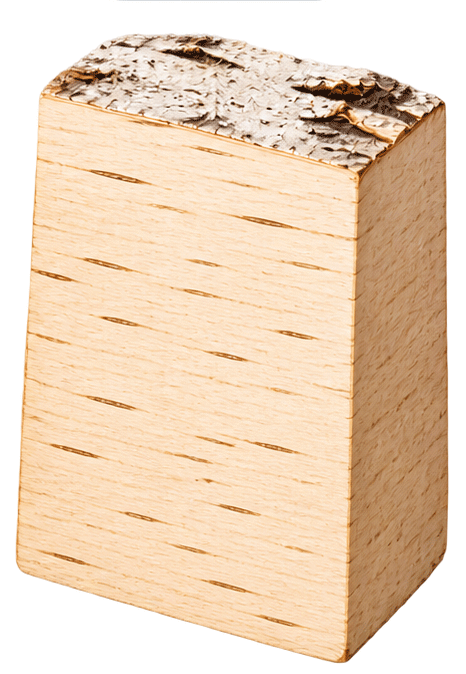
Birch
Found in: Broadly distributed across the Northern Hemisphere — Europe, Russia, northern Asia, Japan and North America
Properties: Hard, tough, relatively fine-grained, light-colored
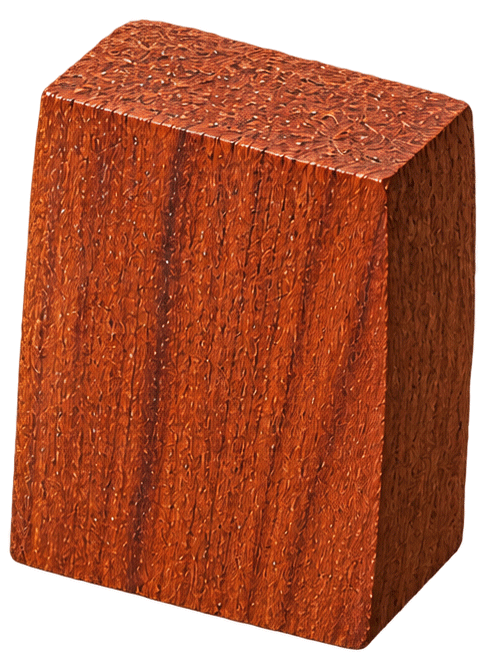
Sapele
Found in: Primarily West and Central Africa, particularly Ghana, Nigeria, Cameroon, Ivory Coast and surrounding regions
Properties: Dense, strong, reddish-brown, attractive interlocking grain
Many Japanese park golf clubs are beautifully finished, reflecting both functional engineering and traditional woodworking expertise.
Two clubs may appear similar externally, yet subtle differences in center of gravity, sole curvature, face construction, and shaft balance can create noticeably different playing characteristics.
The Unique Design of a Park Golf Club Head
Perhaps the most fascinating part of a park golf club is its head design. Unlike traditional golf, where players carry drivers, irons, wedges, and putters, park golf requires one club to successfully perform every shot during the game. That means the head must be incredibly versatile.
The head is ultimately a compromise between distance, control, forgiveness, feel, and durability. Every manufacturer approaches this balance slightly differently, which is why experienced players often develop strong preferences for particular brands and club designs.
Engineers carefully shape the club head to create a balance between forgiveness, directional control, stability, and smooth interaction with the turf. The result is a distinctive head that often combines elegant Japanese craftsmanship with sophisticated weight distribution.
Faceplates
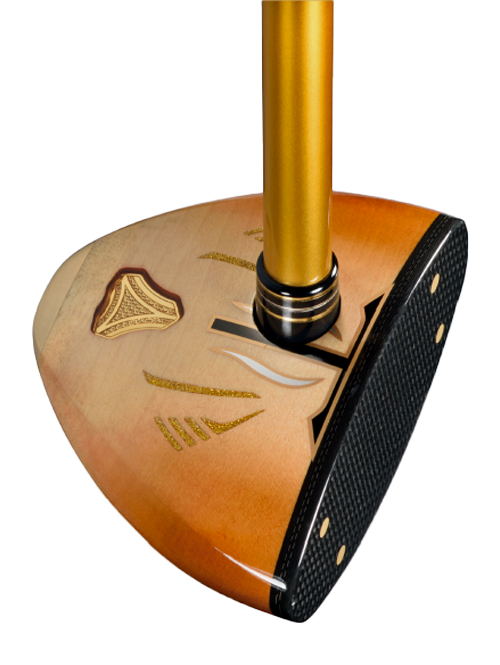
The faceplate is one of the most important parts of a park golf club. Unlike a conventional golf club, where the face is generally an integral part of a metal or composite head, park golf clubs can use a separate face plate made from materials such as graphite/carbon fiber, wood, or other engineered materials.
- Light weight — reduces the overall weight of the club head while maintaining a substantial hitting area.
- Controlled impact response — carbon/graphite materials can be engineered to produce a particular feel and vibration response.
- Durability — a properly constructed face can withstand repeated impacts with the relatively large park-golf ball.
- Consistency — manufactured composite plates can provide relatively uniform performance from club to club.
- Sound and feel — the material and construction of the face influence the characteristic “click” or impact sensation players associate with a quality club.
The face also has to be designed around the unusual requirements of park golf. Players may hit the ball from fairway grass, rough, hard ground or other surfaces, and the club must tolerate considerably more varied contact than a conventional golf club.
Base Plate (Sole Plate)
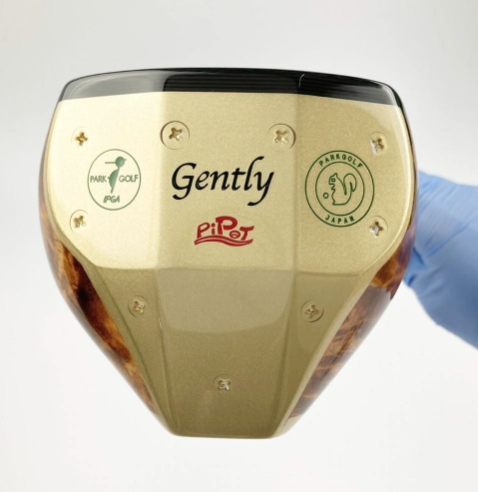
The base plate (or sole plate) is the protective metal or composite plate fitted to the bottom (the sole) of the club head.
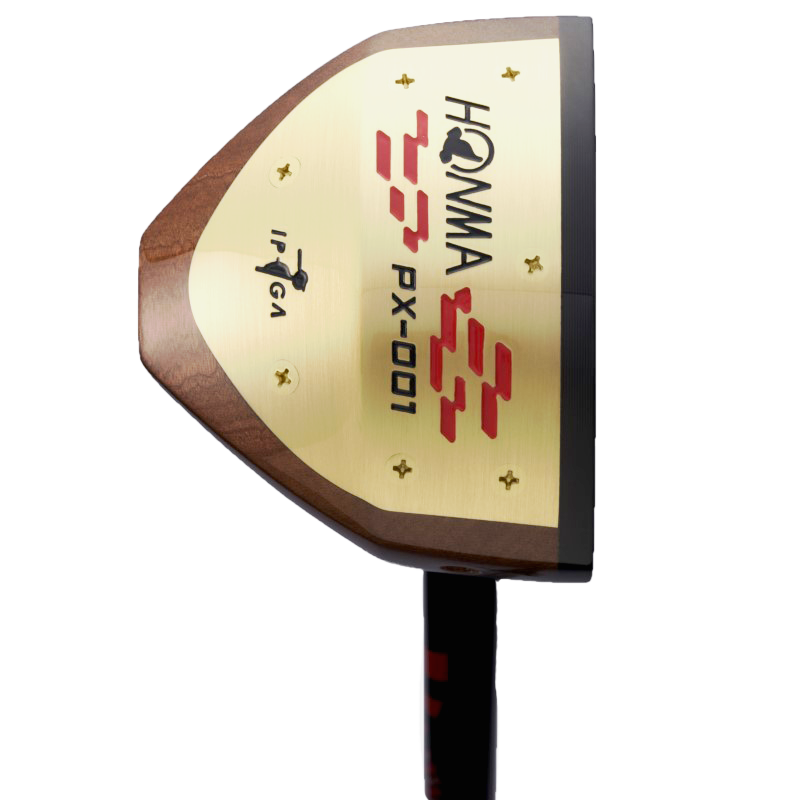
Material: Brass This is the most traditional and widely used material for park golf sole plates. Because brass is relatively dense and heavy, it lowers the center of gravity of the wooden clubhead, providing a more stable and powerful roll.
Protection: It shields the wooden club head (usually made of persimmon or laminated maple) from scrapes, chips, and moisture when it brushes against the turf or strikes the ground.
Weight Distribution: Manufacturers use the sole plate to manage the club’s overall weight and lower the center of gravity, helping stabilize the swing and keep the head level.
Durability: High-end models feature full-coverage bottom plates to maximize the lifespan of the wooden head under regular play on outdoor courses.
Shafts and Grips
Carbon Shaft

The shaft connects the player’s hands to the club head, making it one of the most important components affecting balance, swing feel, and shot control. Park golf shafts are available in several materials, with carbon fiber (graphite) becoming increasingly popular in modern premium clubs while traditional wooden shafts continue to be appreciated for their craftsmanship and distinctive feel.
Carbon fiber shafts offer an excellent strength-to-weight ratio, allowing manufacturers to produce lightweight clubs without sacrificing structural stability. They can also be engineered with carefully controlled stiffness characteristics, helping create different swing profiles for recreational and experienced players alike.
Grips
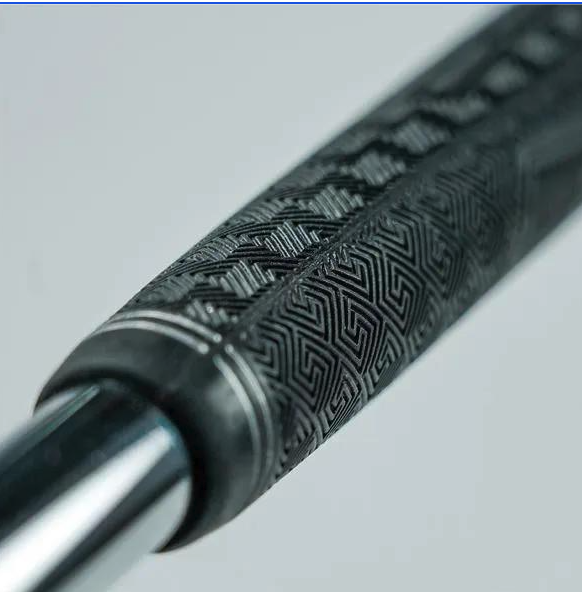
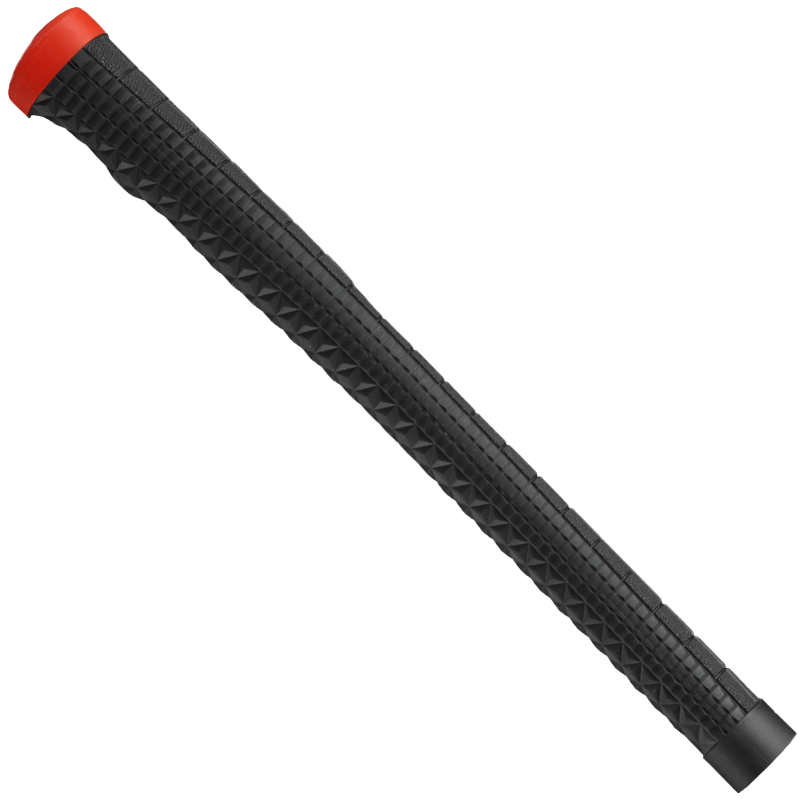
- Soft Rubber: Most park golf grips use a soft, engineered rubber compound designed to offer a secure hold without requiring heavy squeeze pressure.
- Dimensions: Typically measure around 27 to 29 cm in length to accommodate both hands comfortably in a standard park golf stance.
- Texture: Engineered with non-slip surface patterns (such as ridges or micro-treads) to maintain stability in various weather conditions.
The Nippon Park Golf Association (NPGA) requires that club grips contain no markings, patterns, or molded elements designed to indicate specific finger or palm placement.
Core Grip Regulations
- No Finger/Palm Molds: The grip must not feature any patterns or customized shapes that dictate where fingers or palms go.
- No Alterations: The club must use certified equipment and must not be altered or modified from its approved state.
- Grip Tape Rules: Grip tape or similar materials cannot be used to create molded finger placements or patterns. If you plan to add or remove grip tape during a formal competition, you must check with the tournament committee first.
- General Equipment Validation: Official clubs must feature an NPGA certification sticker near the top of the shaft by the grip, alongside the proper manufacturer insignia on the club head sole
The grip is often overlooked, yet it is the player’s only physical connection with the club. A quality park golf grip is designed to provide secure hand placement, comfort during repeated swings, and reliable control in changing weather conditions.
Modern grips typically feature textured rubber or elastomer surfaces that improve traction without feeling excessively firm. Grip diameter and shape also influence comfort, especially for senior players who make up a significant portion of the global park golf community.
The shaft and grip work together as a complete handling system. A beautifully balanced club begins not only with the head but with how naturally the club feels in the player’s hands.
Park Golf Balls
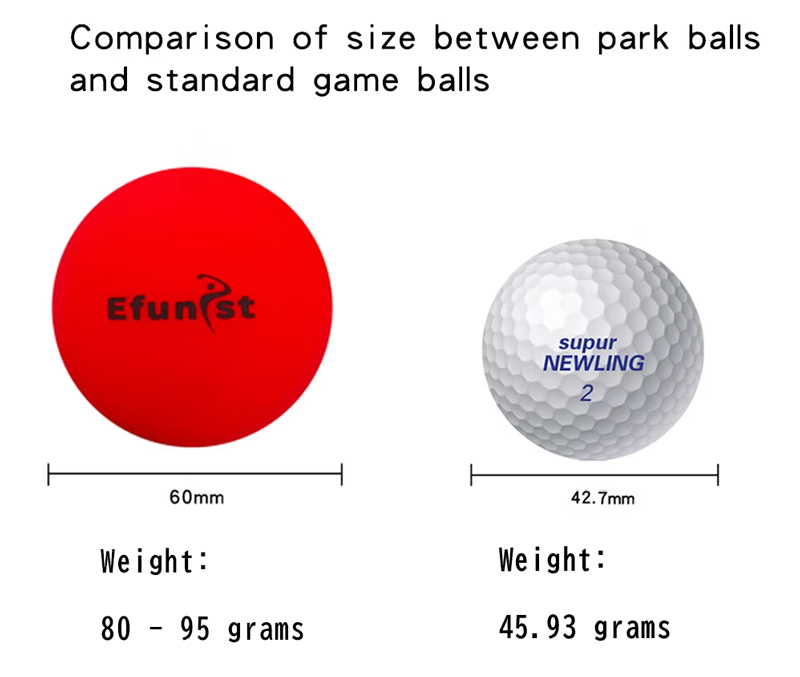
Ball Specifications
- Hard plastic or resin core
- Durable outer shell
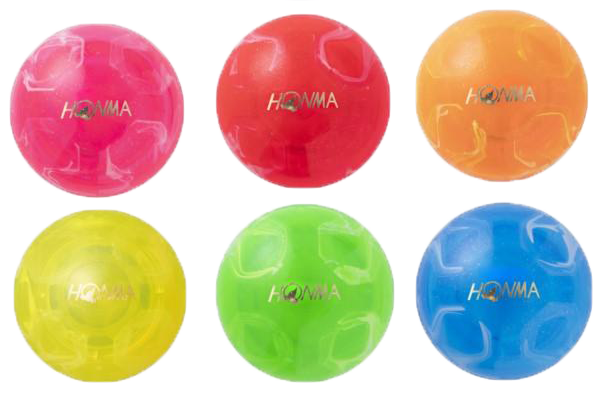
- Bright colors for visibility
- Diameter- 60 mm
- Weight – 80 to 95 grams
- Certification – Official balls used in sanctioned play must be approved by and carry the logo mark of the Nippon Park Golf Association
Park golf balls are designed for controlled distance rather than maximum power, making the game more strategic and beginner-friendly.
Types of Construction
- One-Piece Balls: Made from a single molded plastic resin; they are highly durable, affordable, and commonly used as course rentals.
- Two-Piece Balls: Feature an inner core and an outer cover made of different materials to balance durability with a softer feel on impact.
- Three-Piece (Multi-Layer) Balls: Constructed with multiple resin layers and specialized cores designed for advanced control and performance, primarily produced by brands like Mizuno and Asics.
Park Golf Hole Size
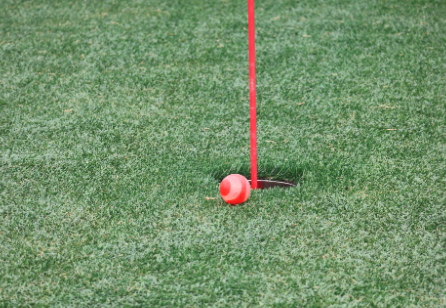
Size:
- Approx. 200 mm diameter
- Nearly twice the size of a standard golf hole
Why Is the Hole Larger?
- Speeds up gameplay
- Reduces frustration for beginners
- Encourages social, relaxed play
How to Choose a Park Golf Club
For beginners:
Look for a comfortable, forgiving club with manageable weight and a stable feel. Steel shafts are more forgiving, and the head can be made of less expensive woods, like Maple or Birch. Personally, I started with an ASICS Entry Model SC-302. The base plate is steel, and the shaft is fiberglass. I used my club for about 3 years. Maple gives you the best combination of price, durability and predictable performance.
| Wood | Cost | Beginner-friendly | Durability | My rating |
|---|---|---|---|---|
| Maple | $ | ⭐⭐⭐⭐⭐ | ⭐⭐⭐⭐⭐ | 🥇 Best choice |
| Birch | $$ | ⭐⭐⭐⭐ | ⭐⭐⭐⭐ | 🥈 |
| Sapele | $$–$$$ | ⭐⭐⭐⭐ | ⭐⭐⭐⭐ | 🥉 |
| Persimmon | $$$$ | ⭐⭐⭐ | ⭐⭐⭐⭐⭐ | Premium |
For experienced players:
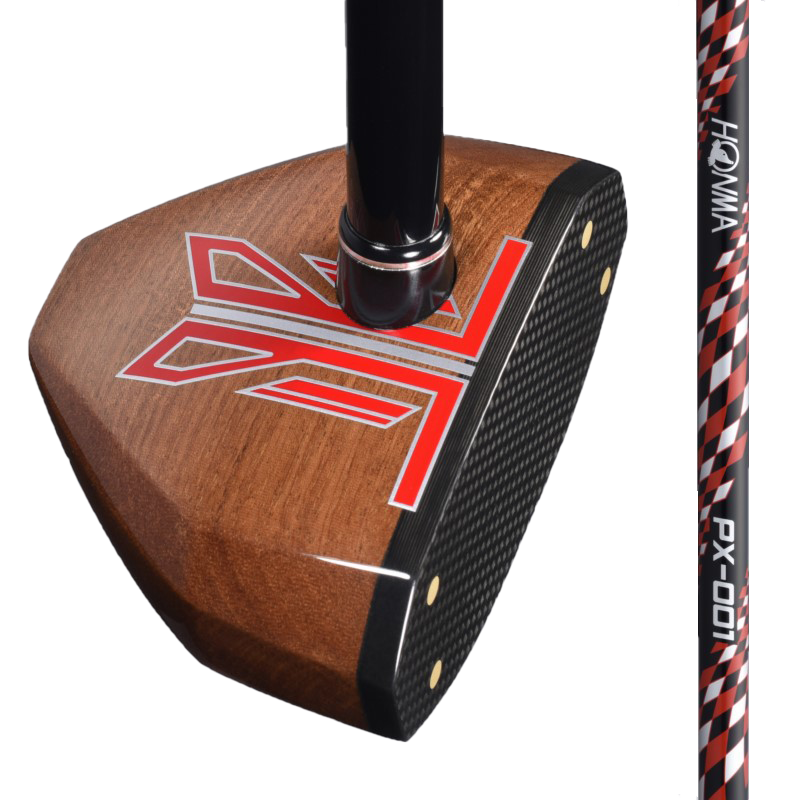
Consider head design, face construction, balance, shaft characteristics and feel. A weighted base made of brass will help get you out of the rough areas, and add power to your swing. I actually used Chat GPT and described my weaknesses in park golf, like having trouble getting out of the rough, wanting a carbon shaft but heavier club head, and I found that the Honma PT-001 (photo at top of this page) fit my needs. It has a wider “sweet spot” to help my tee shots, a nice brass base to help glide over longer grass, and a huge red and white arrow to help line up putts. I love the dark reddish-brown finish of the Sapele wood.
For senior players:
Weight, grip comfort, balance and vibration characteristics can be especially important. You won’t want a club that is too heavy. You will most likely hit shorter distances from the tee, so comfort and stability are key points to look for.