
What Is Park Golf? The Japanese Golf Sport Taking the World by Storm
What Is Park Golf?
Park Golf is a simple, affordable and highly social form of golf that originated in Hokkaido, Japan, in 1983. Played with just one club and one ball, park golf combines elements of traditional golf and lawn games to create a sport that is easy to learn but challenging to master.
Unlike traditional golf, park golf requires no set of clubs, golf cart or expensive golf equipment. A typical course consists of nine holes, and games can usually be completed in a fraction of the time required for a traditional round of golf.
Today, park golf is played by millions of people, particularly in Japan and Korea, and the sport is beginning to attract interest in other countries around the world.
One Club. One Ball. Endless Possibilities.
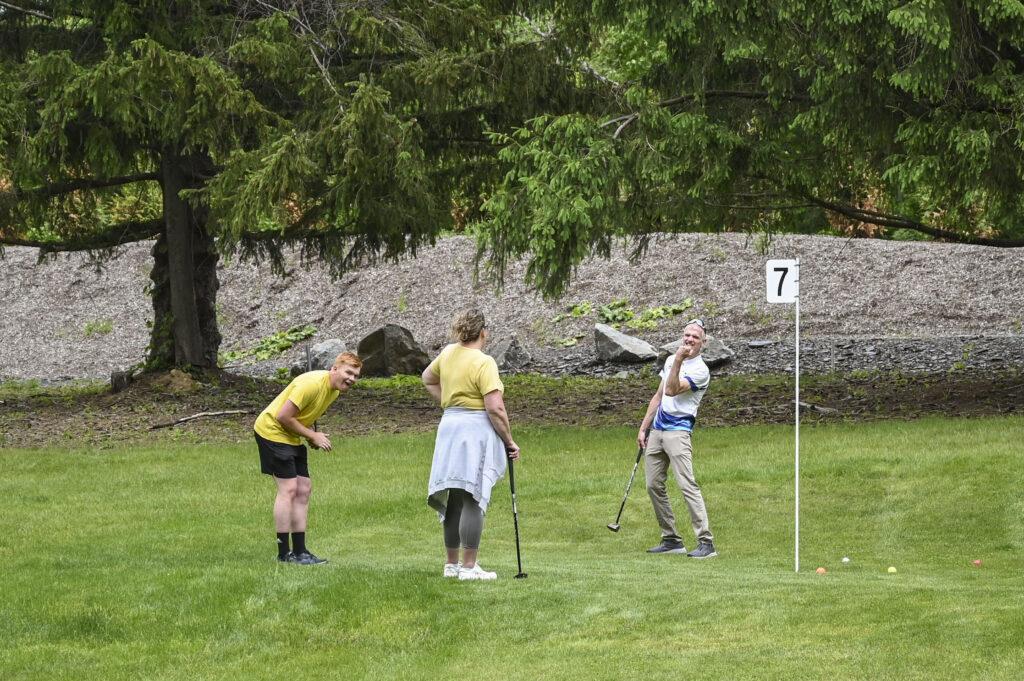
There are an estimated nearly 2 million park golfers worldwide, the vast majority in Japan and Korea, but the numbers increase on a daily basis as more and more people try it! There are over 1.3 million players in Japan alone! Japan has over 1,300 park golf courses. See the numbers here.
Korea started Park Golf playing in 1995, and today there are an estimated 600,000 players (220,000 registered association members) and Korea has over 530 courses, mostly operated by the Government in connection with healthcare services. See key figures here.
Park Golf: 1 Club, 1 Ball
All you need to play Park Golf is one club and one ball. (See equipment here) Unlike traditional golf, Park Golf players use the same club for every shot, from the tee to the hole. The club combines some of the functions of a driver, fairway club and putter into one versatile club. Park Golf is a combination of lawn croquet and traditional golf, which anyone can learn in minutes, but spend years perfecting their game!
Depending on the season, the grass condition, wind direction, placement of the cup, the game can be played practically daily with new challenges each time you play. It is extremely addictive yet very casual and social. I personally play 3 to 4 times a week and I hated traditional golf!
Basically, the 80 to 95 gram (2.8 – 3.4 ounces) ball is smacked along the ground, using 1 club which is a combination of a driver and a putter all in one. By changing your stance, it’s possible to hit a lofting ball, a drive ball or even a spinning ball which is meant to stop from rolling too far.
In these ways, park golf can be even more challenging than traditional golf, but all with only 1 club!
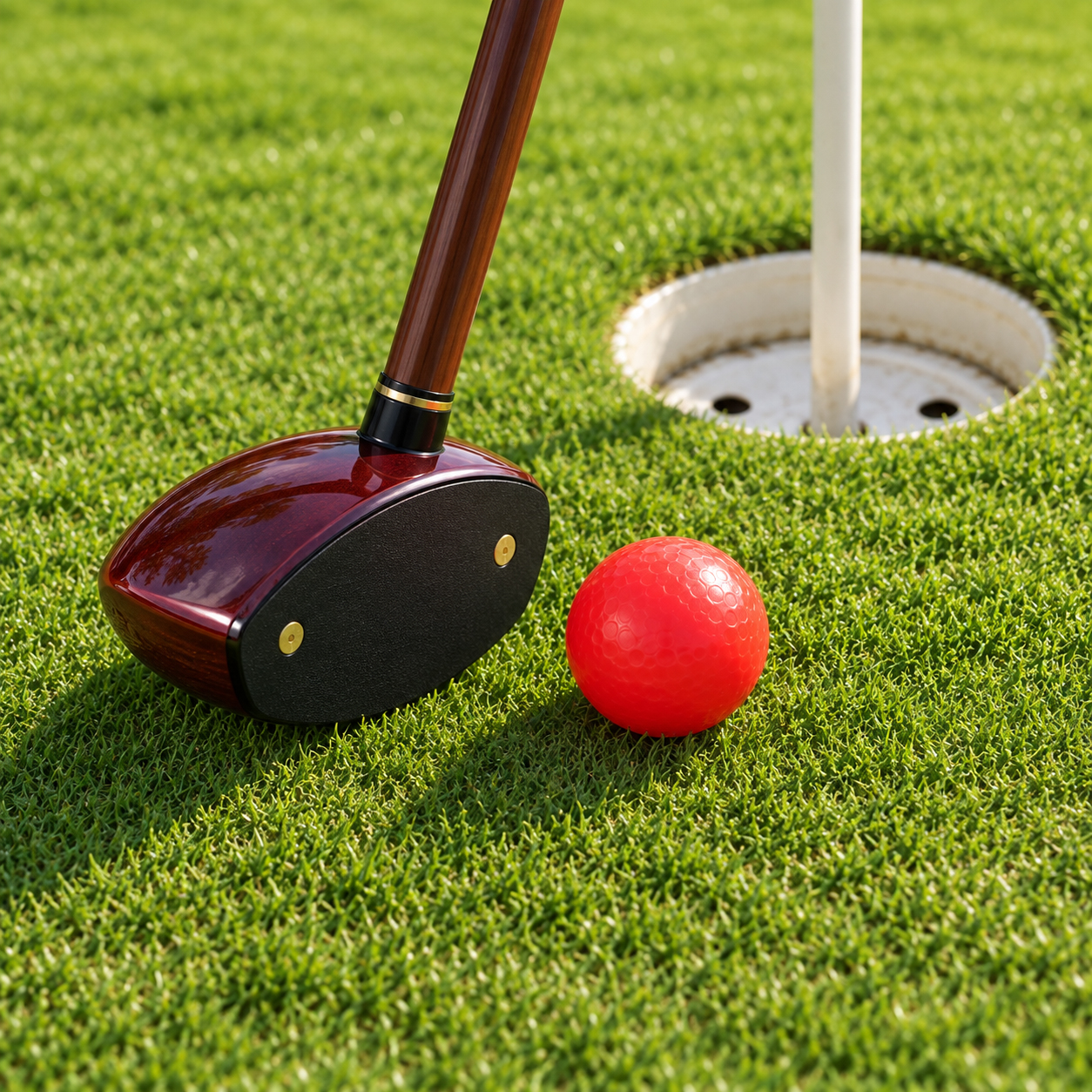
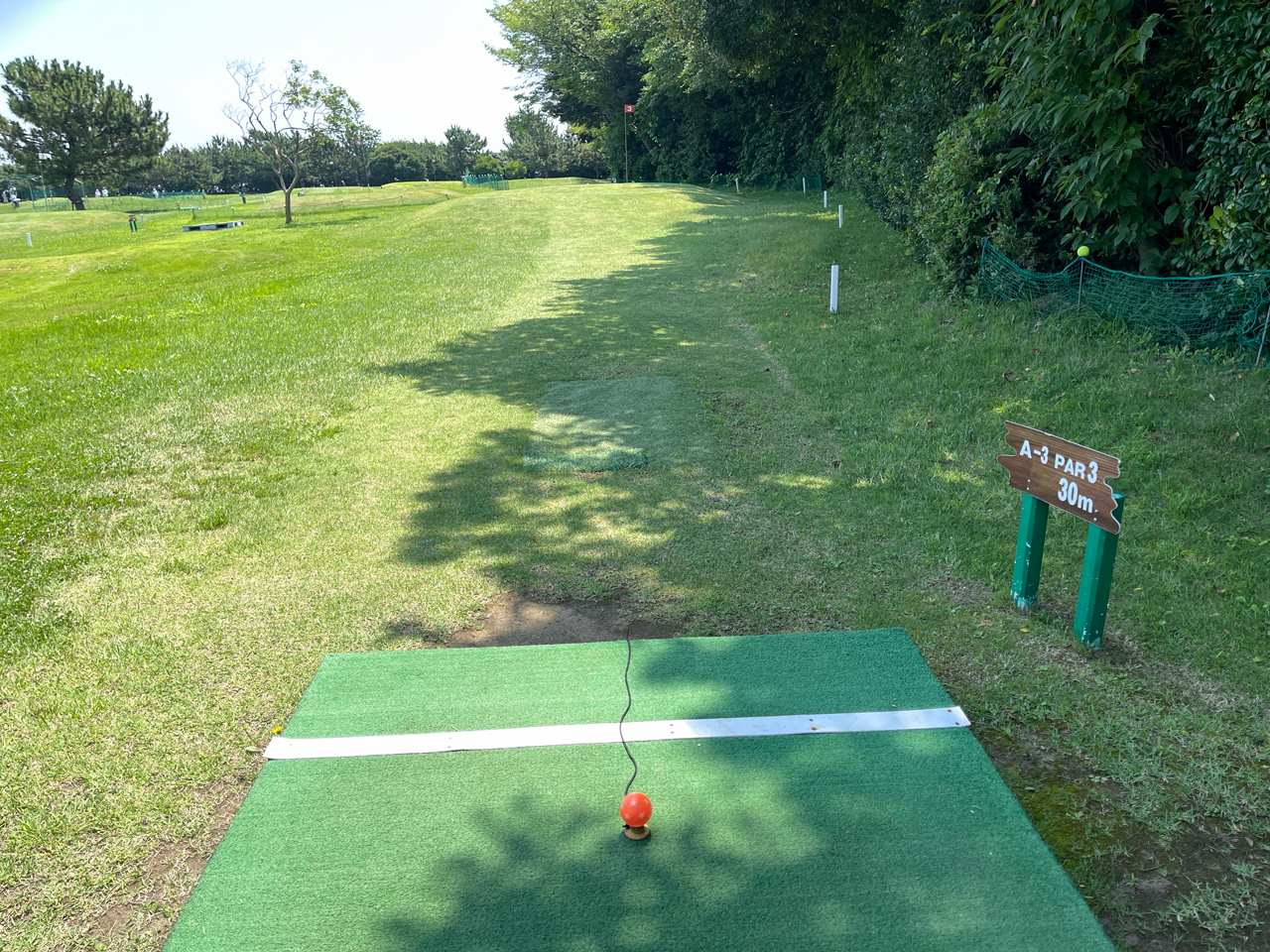
Looks can be decieving!
This is a park golf tee. This one is artificial grass on a plastic pallet. The area is about 4.5 feet x 4.5 feet, the tee is a reusable rubber or a brush, and is 0.9 inches high or less.
This hole is a par 3, and its 30 meters. As the green is on top of a hill, you must be careful not to not over or under shoot or the ball will roll off.
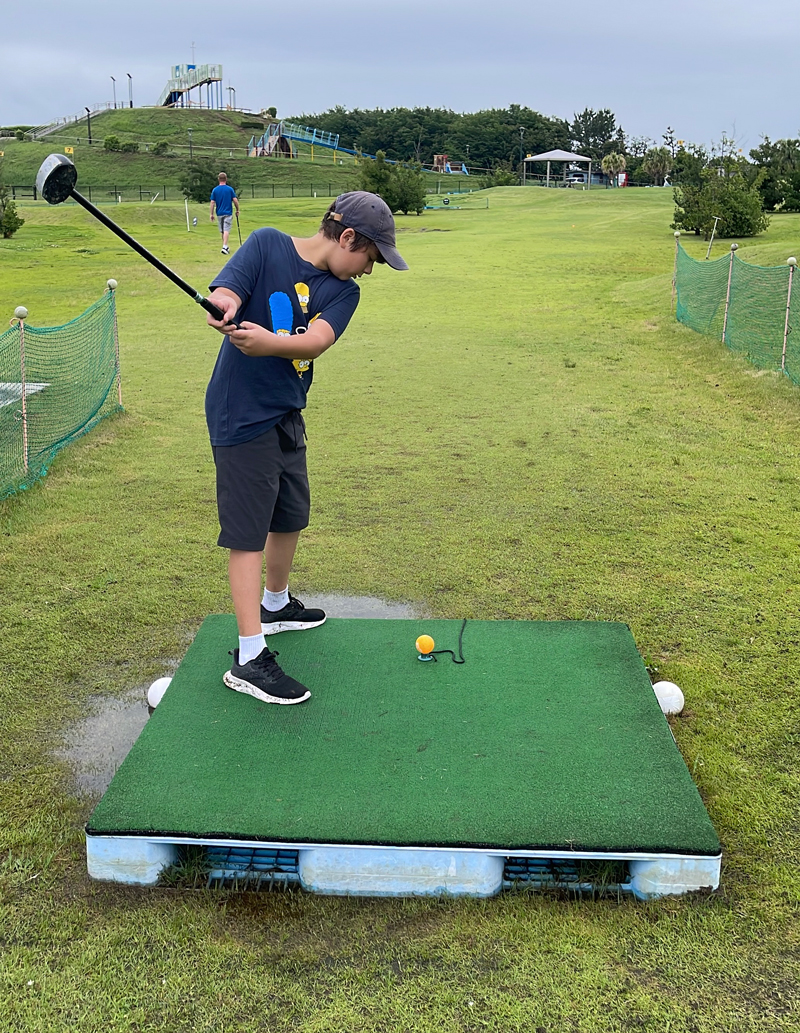
This is my grandson’s Park Golf debut. He quickly learned the basics – how to line u his shot using the club, then..
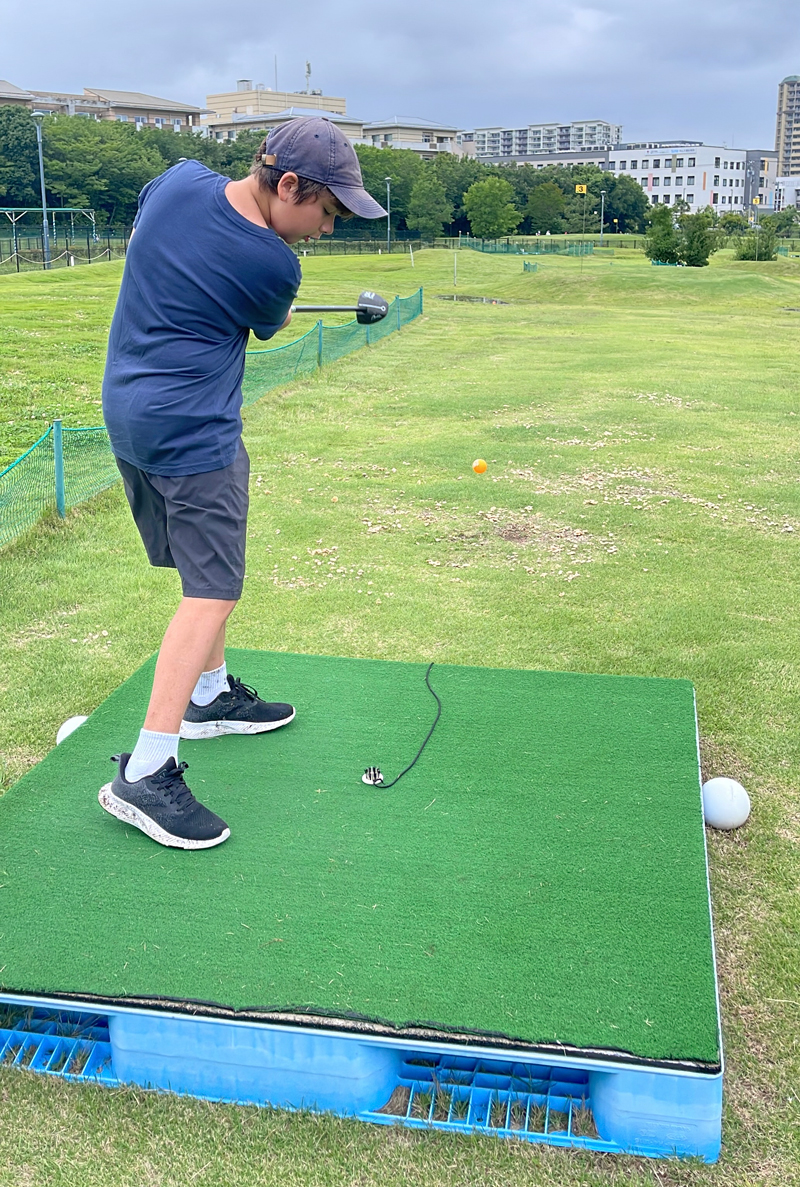
“Keep your eye on the ball”!
His very first day he hit a bogey after a few holes! He didn’t want to go home after a complete round, so we did another 9 holes.
Park Golf course description and specifications
Park Golf is being called the “Pickleball of Outdoor Golf” and is an extremely attractive way for developers or city councils like parks and recreation organizations to utilize unused or under-performing spaces.
A minimum of 3 acres (about 12,000 square meters) for 18 holes is desirable.
A course is laid out in units of 9 holes. Standard par for 9 holes is 33 or 66 for 18 holes.
A typical layout would include 4 x par 3 holes, 4 x par 4 holes and 1 x par 5 hole. Maximum distance for a par 5 hole is 100 meters (110yards). The total distance for 9 holes must not exceed 500 meters (546 yards)
The tee ground is 1.3 meters by 1.3 meters (4 1/2 feet x 4 1/2 feet) and a rubber or brush type tee is used, usually attached by a string for reuse.
There are regulations on bunkers, OB (out of bounds) markers, as well as safety considerations which can be seen in detail on the International Park Golf Association of America, the ONLY official representative of the Nippon Park Gold Association.
Short introduction video by the Japan Park Golf Association 日本パークゴルフ協会NPGA
Park Golf vs Traditional Golf
Park Golf
Traditional Golf
| 1 club 1 ball, total weight about 600 to 700 grams | Up to 14 clubs total weight about 9 to 14 kilograms |
| 9 holes typically played in 30 to 45 minutes | Usually 9 or 18 holes |
| Walking distance under 1 mile for 18 holes, or about 2,500 steps | Walking distance 4 to 7.5 miles, or over 10,000 steps |
| Very social – players are relaxed and laugh with each other at missed shots etc. | Usually quiet, tense and polite |
| Less physical, less walking and much less backswing and hitting power | Extremely challenging, mentally and physically |
| Less expensive – most 18 hole courses are less than U.S. $20.00 | Fees can be high if caddy, golf cart, equipment included |
Benefits of Playing Park Golf
Why Park Golf?
One Club. One Ball. A Sport for Everyone.
Park Golf combines the enjoyment of golf with walking, fresh air, and social connection—without the cost, complexity, or space requirements of traditional golf.
Originally developed in Japan, Park Golf has grown into a popular recreational sport enjoyed by people of all ages and abilities. With just one club and one ball, players can learn the basics in minutes and enjoy a round together almost anywhere there is suitable green space.
4 Reasons Park Golf Is Different
1. Easy to Learn. Easy to Enjoy.
No complicated equipment. No intimidating rules. No years of practice required.
Park Golf is remarkably simple for beginners to get started. Players can learn the fundamentals quickly and improve their skills naturally through play.
That makes Park Golf ideal for first-time players, families, seniors, and people who have never considered themselves golfers.
2. Walking, Exercise & Fresh Air
Get moving without making exercise feel like exercise.
A typical round combines walking with the balance, coordination, concentration, and controlled swinging needed to play the game.
Because Park Golf courses are compact and played at a comfortable pace, the sport can provide an enjoyable way to stay active while spending time outdoors.
Play for the score. Stay for the health benefits.
3. Affordable & Space-Efficient
Bring golf to places traditional golf cannot.
Park Golf does not require a traditional 18-hole golf course or extensive equipment. Courses can be designed for parks, recreational areas, retirement communities, resorts, and other suitable green spaces.
For communities and developers, this means the opportunity to create an attractive recreational facility with a smaller land footprint and lower equipment requirements than traditional golf.
More players. Less space. Lower barriers.
4. Social by Nature
The best part of the game may be the people you play with.
Park Golf is naturally social. Players walk the course together, talk between shots, encourage one another, and often return regularly to play with friends and neighbors.
That makes it more than a sport—it can become a community activity and a reason for people to get outdoors and connect.
For retirement communities, municipalities, and recreational organizations, Park Golf can help create an active social environment where people want to return again and again.
More Than Golf. A Better Way to Play.
Park Golf brings together four things that communities increasingly need:
Easy participation.
Healthy activity.
Affordable recreation.
Social connection.
And because it can be introduced on a relatively small area of land, Park Golf offers communities an opportunity to create a new recreational attraction without building a traditional golf course.
“Why Communities Are Choosing Park Golf”
- Small land requirement
- Lower development and operating costs
- Active-aging recreation
- Community socialization
- Family/multigenerational participation
- Potential tourism/recreation attraction
- Ability to use existing park or green space
Ready to Discover Park Golf?
Please contact us here to get more information on how you can set up your own Park Golf course – for communities, parks and recreation facilities, retirement communities and even private clubs.