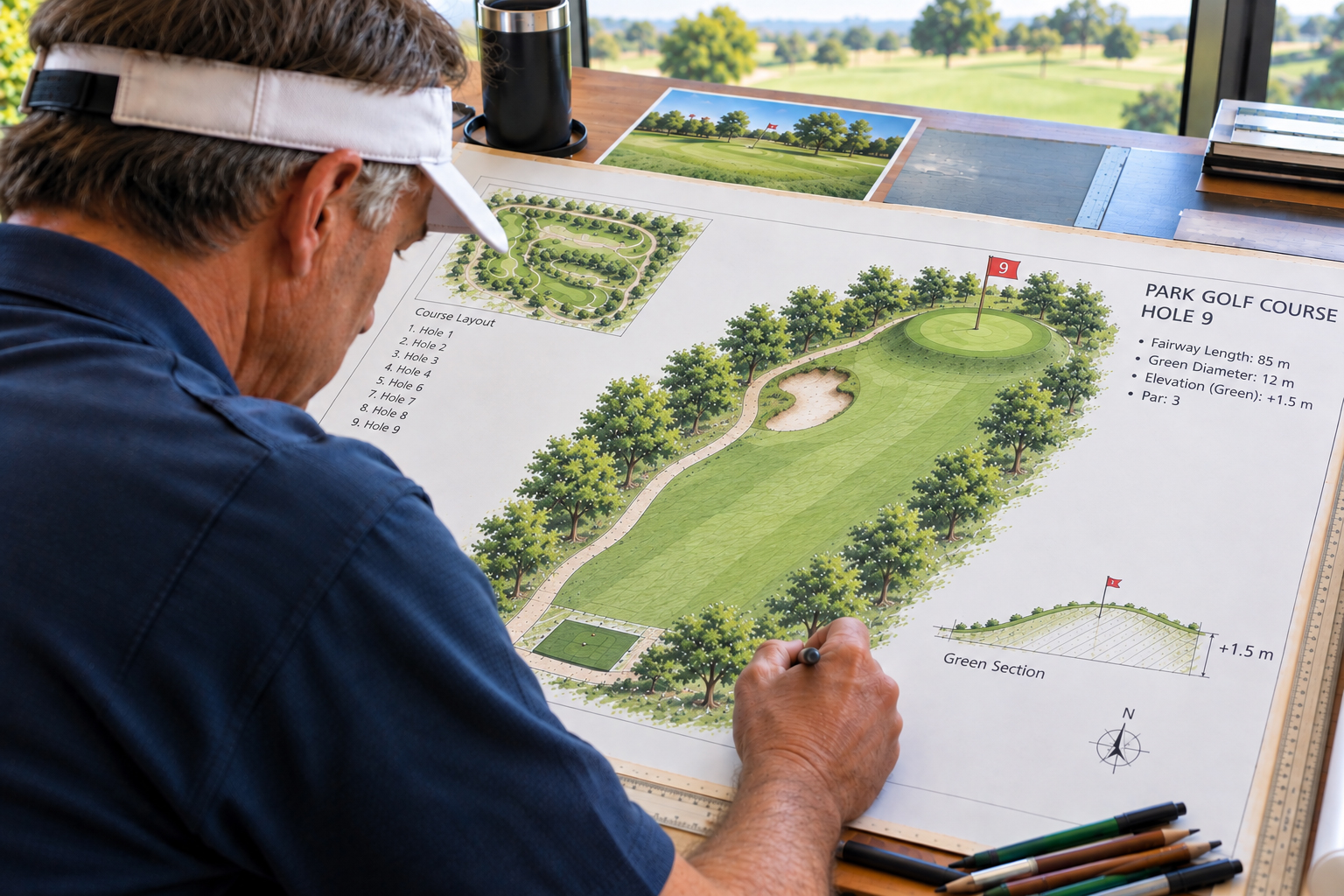
Let us Design a Course for You!
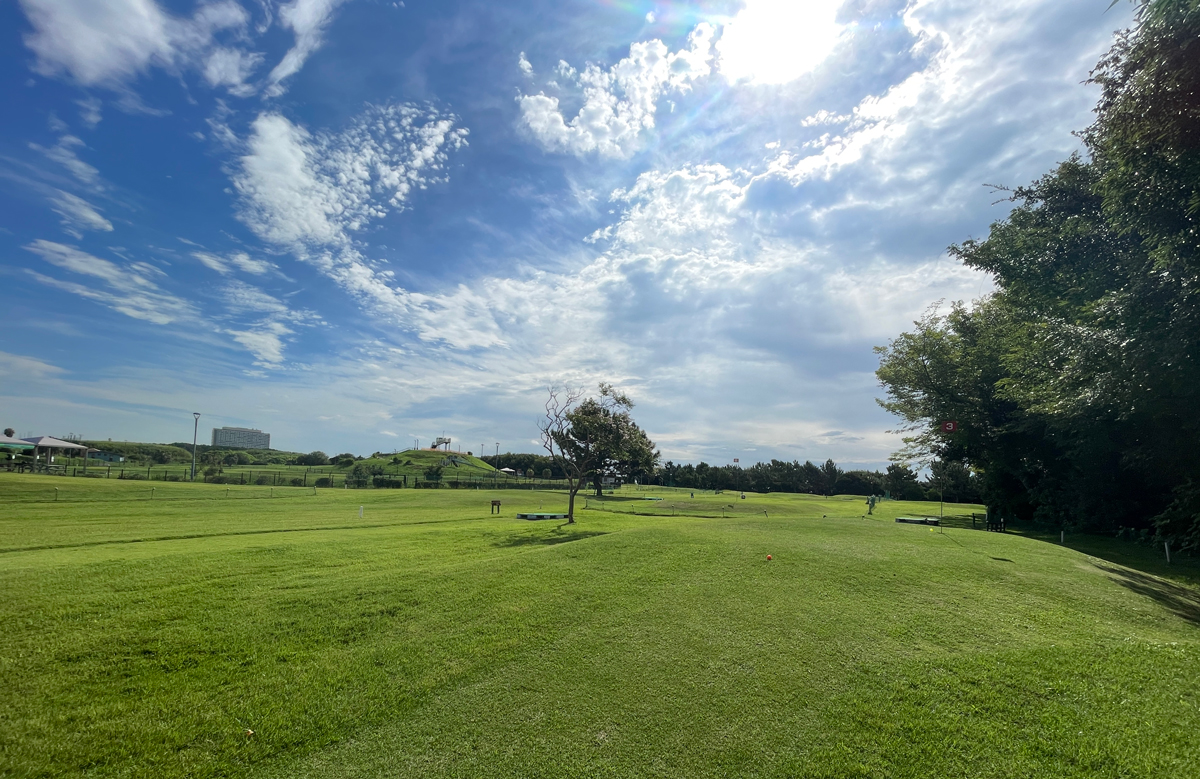
Current Course Locations
In Japan:
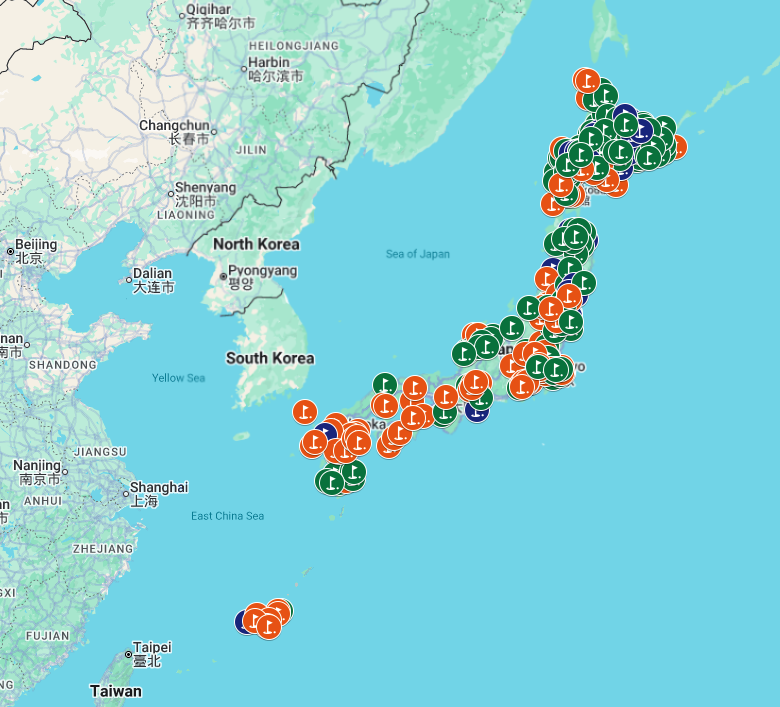
Japan has over 1,300 courses so it is not feasible to list them all, but an interactive map is available here. Japan Park Golf Courses
In the United States:
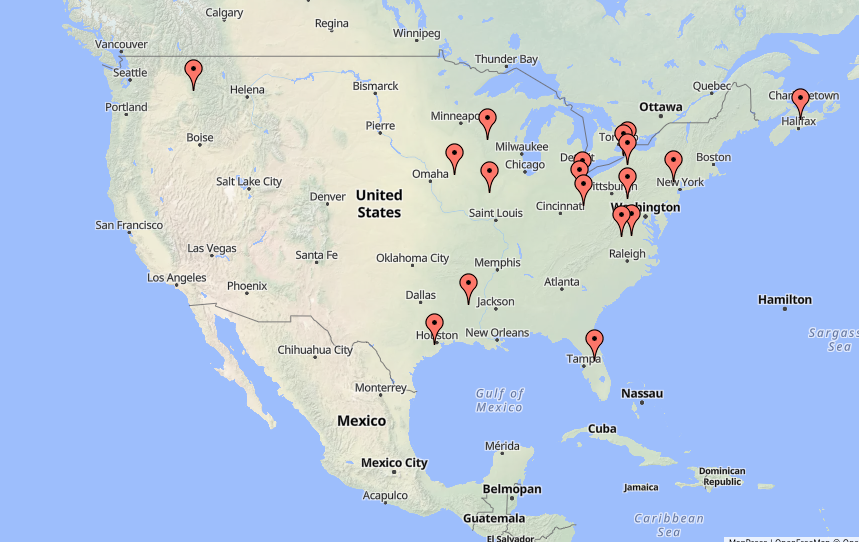
In the United States, there are 18 Park Golf Courses which operate under the strict Nippon Park Golf Association standards. They can be found here.
Variation Park Golf Games

Best Ball (Four Ball)
Pairs Stroke Play (Best Ball / Four-Ball): Both players in a pair hit their own ball throughout every hole. At the end of each hole, the team records only the single best score achieved by either partner. This format rewards aggressive play because a player can attempt a risky shot knowing their partner has a safe shot in play.
Alternate Shot (Foursomes)
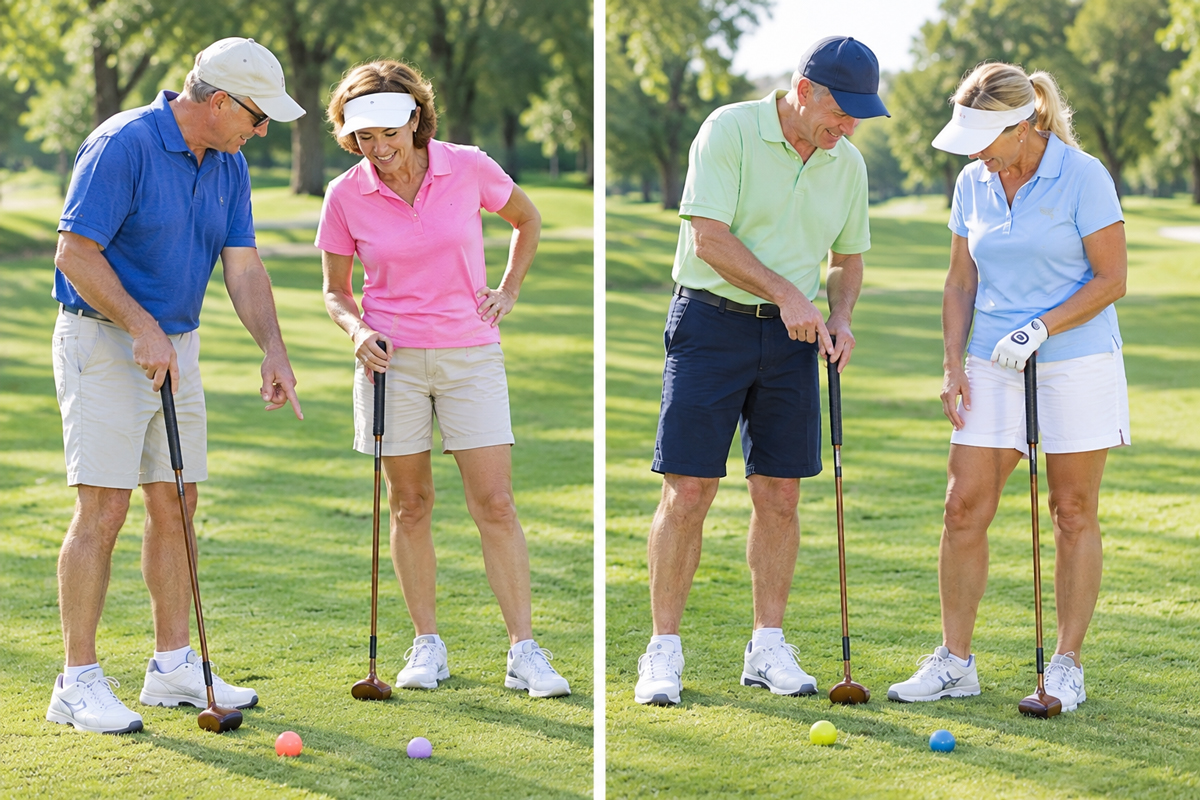
Alternate Shot (Foursomes): A two-person team uses only one ball.
Player A tees off on odd-numbered holes (1, 3, 5, etc.), while Player B tees off on even-numbered holes (2, 4, 6, etc.).
After the tee shot, partners alternate hits until the ball is holed.
This format requires close teamwork and strategy, as a bad shot puts your partner in a difficult position.

Match Play
Match Play: Played hole-by-hole between two players (or two teams). Rather than counting total strokes across the entire course, the player who completes a specific hole in fewer strokes wins that hole (“1-up”). The game ends when one player leads by more holes than there are left to play.

Group Scoring
Group Aggregate Scoring: A group of 3 or 4 players play individual stroke play, but their individual scores are added together at the end to create a total “Group/Team Score” to compete against other groups.
Course Specifications
From the International Park Golf Association America website:
The IPGAA adopts the standards set by the Japan/Nippon Park Golf Association (NPGA) {please make note of acronym, do not be misled or deceived by similar acronyms}.
- Area
- A minimum of 3 acres for 18 holes is desirable
- Although there is no specific upper limit, 5 acres of flat, open land is sufficient
- Course Layout and development
- Course is laid out in units of 9 holes, if 18 holes are in the same location, holes should be displayed as A 1-9 and B 1-9
- Standard par for 9 holes is 33 (66 for 18) and should be divided into par 3, 4, and 5. A typical layout would include 4 x 3 par holes, 4 x 4 par holes, and 1 x 5 par hole.
- Maximum distance of one hole is 110 yards (100 meters)
- Distance of 9 holes must not exceed 546 yards (500 meters)
- Layouts that include dog legs are not recommended. Parallel holes in the same direction or intersecting holes are unacceptable. Safety and flow of play are to always be in consideration.
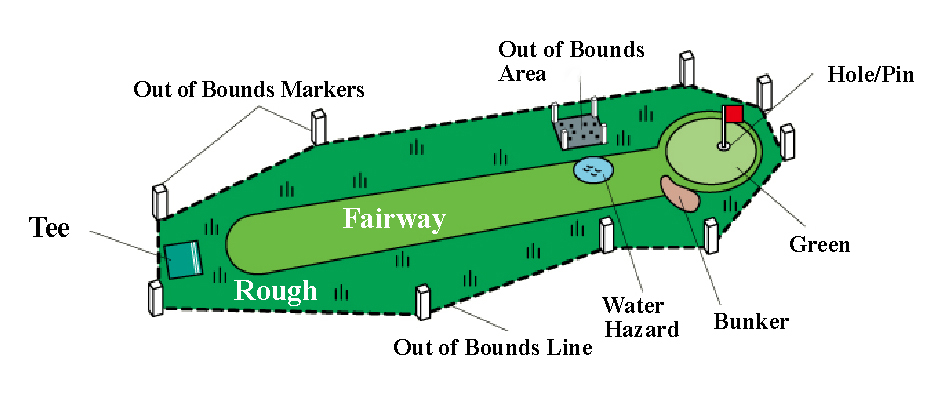
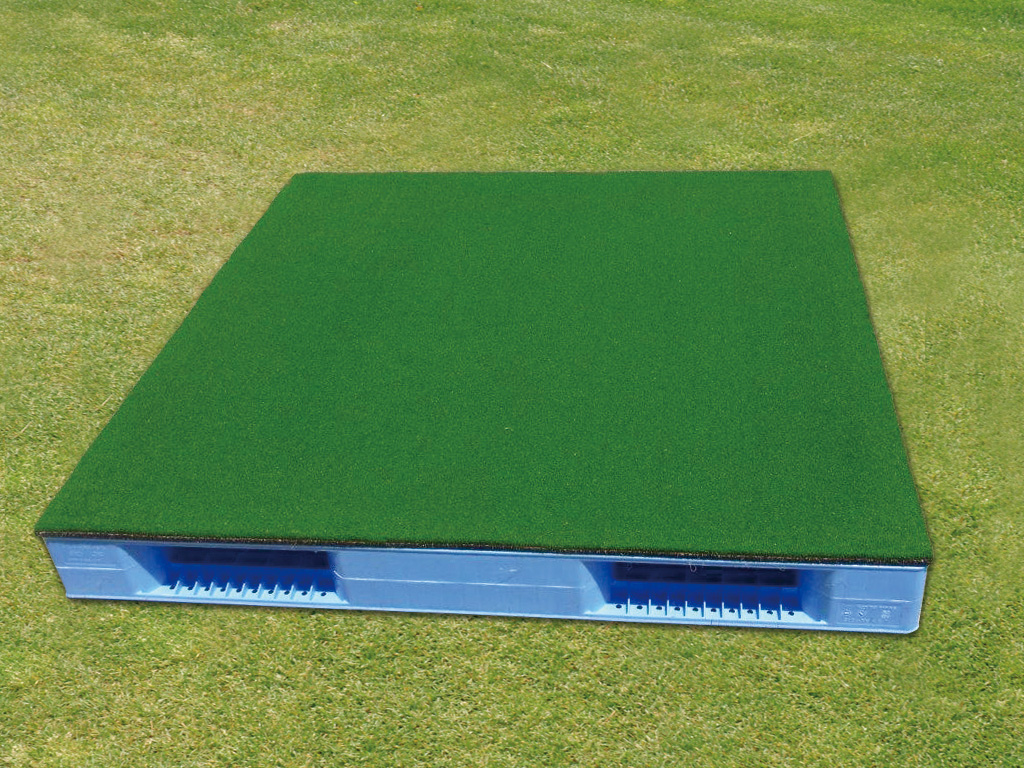
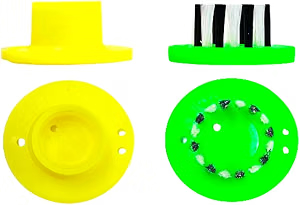
- Tee Ground should be about 4 ½ x 4 ½ feet (1.3 x 1.3 meters) minimum with a height not to exceed 11 inches (30 cm) from the ground. In addition, the tee mark should be set or drawn at a minimum of 16 inches (40 cm) from the front end of the tee ground. The tee must be at least 0.9 inches (2.3 cm) high and be made of a rubber or soft material. (see below)
- Greens: Shape is up to the designer, but when considered as a circle, the preferred diameter is 16 feet (5 meters) or more.
- Bunkers: As with all design, take into consider all aspects of the hole; distance, location, shape, green… There is no limit to the size or number of bunkers.
- Fairways and Rough: They may be divided, but the grass height of the ruff must be trimmed to allow the ball to ‘escape’. The fairway must be at least 6.5 feet (2 meters) wide. Meaningful undulations in the fairway add a degree of difficulty but if not possible, a flat fairway is acceptable.
- Overall design: There may be some measure to increase difficult of the course, but care should be taken not to deter participation. Park Golf is intended for a minimum of 3 generations to be able to enjoy together.
- OB (out of bounds): Setting OB lines and OB zones should be clearly visible. Pylons or stakes should be about 16 inches (40 cm) above the ground
- OB Lines are marked with white pylons / stakes
- OB Zones are marked with upper part painted blue
- Cups: Hole cups must be sunk 1/2 inch (10 cm) below the ground surface
- Pin: Pin should be between 6.5 ft – 8 ft (2 – 2.5 meters) tall.
- Hole distinction: Each hole should have a Tee sign (course diagram with OB explanation is helpful, but not necessary)
- The distance of one hole is measured from the tee linem through the center of the fairway, and to the hole cup.
- Points to remember:
- It is recommended that the long holes are placed approximately 3 holes from the start to facilitate play progression, especially when considering large groups.
- Tee ground can be of any construction. Some easy considerations are: Wooden frame filled with sand (or soil) and a large rubber mat with artificial turf laid on top or a partially sunken plastic shipping pallet with artificial turf on it. (see below)
- OBs are set up to clarify the boundaries of the course and ensure the safety of players. Layouts that hinder the enjoyment and progress of play should be avoided and the scenery of the course should be considered.
Safety Measures and Indications within the course
The following measures shall be taken to prevent accidents on the course and ensure the safely of players.
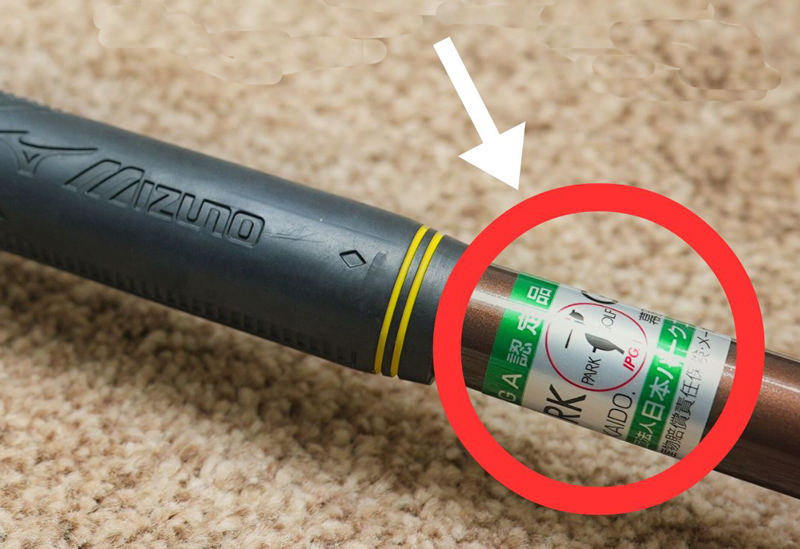
- Clubs, balls, tees, etc used on the course should be Park Golf Equipment certified by the strict standards and testing of the NPGA and/or approved by the IPGAA.
- If an individual is found using equipment that does not meet this standard, play should be stopped and player offered safe official Park Golf equipment, especially if playing in a group.
Course Layouts
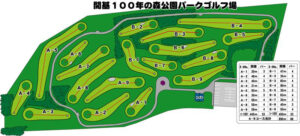
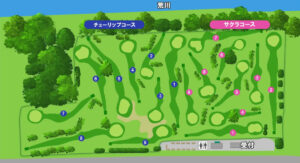
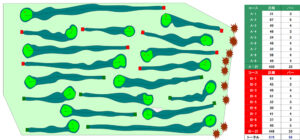
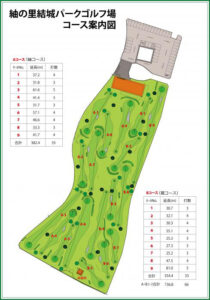
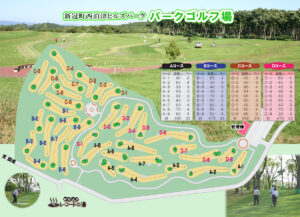
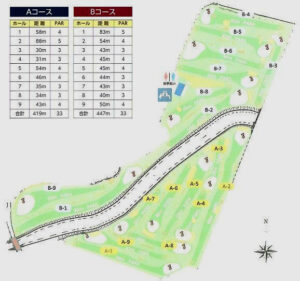
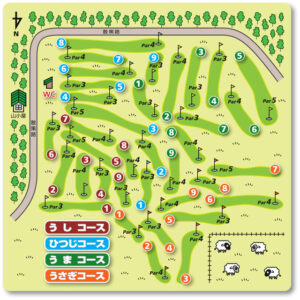
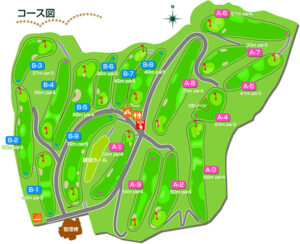
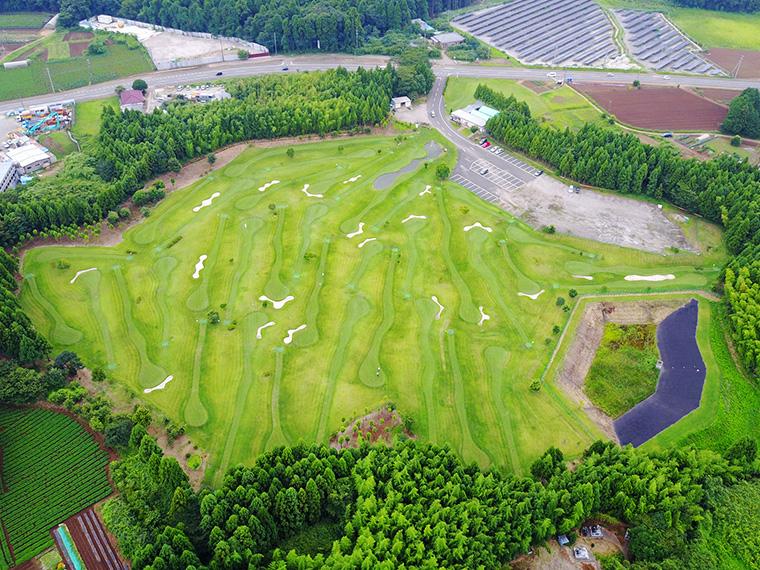
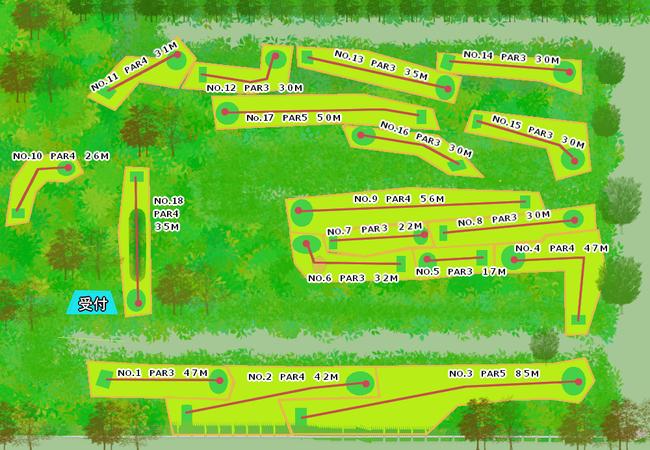
These are samples of some typical Park Golf Course layouts. To minimize walking distances, greens and tees are always set near each other, so after sinking the putt, the next tee is very near.